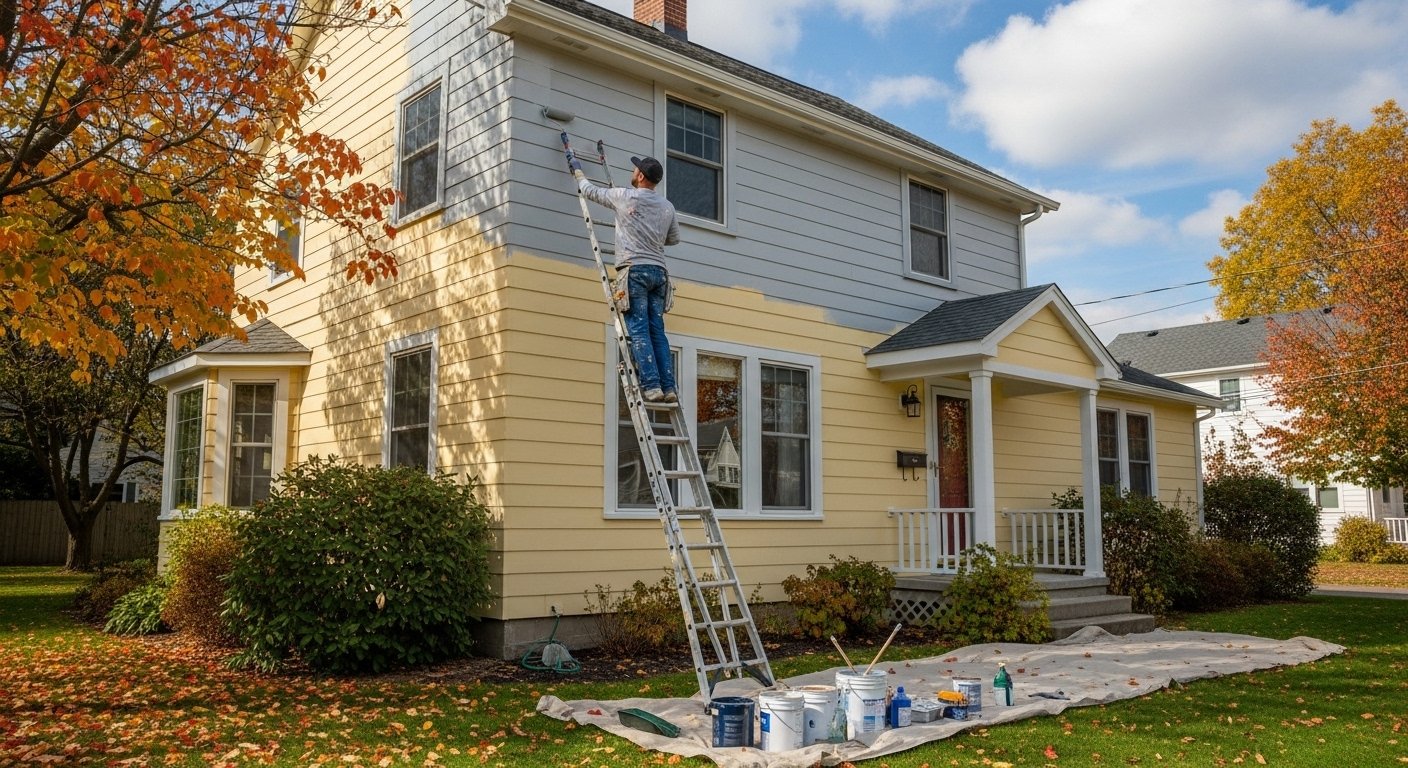
Exterior Restoration
Exterior Restoration in Algonquin, IL
This service is designed for the most common “why doesn’t it look right?” issues: adhesion, surface condition, and finish choice. Below you’ll see what’s included, how the work is staged, and what actually changes price.
Fast self-check
If you’re seeing these signs, this service is likely the right fit:
- Peeling paint around trim, fascia, or window edges
- Chalky residue on siding when you rub it
- Cracked caulk lines that keep opening up
- Dark staining or tannin bleed on wood areas
- Patchy color from sun exposure and weathering
- Previous paint layers lifting in sheets after winter
What we do
We don’t treat prep as an “optional upgrade.” A clean result comes from stable surfaces, correct primers, and a finish coat applied with control.
- Confirm scope, access, protection plan, and finish expectations
- Surface prep: repair, sand, caulk, and prime based on what we find
- Apply coatings with coverage targets (not “one-and-done”)
- Detail pass for edges, touch-ups, and cleanup
- Walkthrough so you know what was done and how to care for it
Common scenarios we see in Algonquin, IL
Projects here often involve a mix of normal wear and seasonal stress—especially on exteriors. We’ll point out what’s cosmetic vs what will shorten paint life (failed caulk, moisture pathways, glossy surfaces, or repairs that weren’t sealed).
What we see in Algonquin-area projects
This is the real-world stuff that determines prep time, material choice, and how long the finish lasts.
- Freeze–thaw expansion opening seams at trim and corner boards (Crystal Lake and Huntley exposures)
- South-facing UV fade and peeling where previous coatings were too thin
- Moisture-prone fascia/soffit edges near the Fox River corridor that need repair before coating
- Chalky siding that won’t hold paint without the correct wash and primer plan
- Multi-material exteriors (brick + siding) where color transitions must be intentional
Typical timeline and expectations
We’ll confirm your specific schedule after a walkthrough, but these ranges help set expectations.
- Typical exteriors: 3–7 days depending on weather windows and prep
- Restoration vs repaint: heavier scraping/repairs can add days, but protects the next cycle
- Weather reality: rain, wind, and temperature swings can pause work—quality beats rushing
What we don’t do
A clean result means saying “no” to shortcuts that create callbacks.
- We don’t coat over active peeling without removing failed layers first
- We don’t hide rot—damaged wood gets repaired or replaced before paint
- We don’t caulk every joint indiscriminately; we seal where it helps, not where it traps moisture
- We don’t paint when temps/humidity won’t allow proper film formation
Our process
A consistent process keeps quality predictable.
- Assess failure areas and moisture pathways; set the prep plan
- Scrape/sand failing layers; repair wood and rebuild caulk lines
- Prime exposed substrate and problem areas for adhesion
- Apply finish coats with coverage targets and weather monitoring
- Clean up, verify touch-ups, and review maintenance expectations
Pricing factors
Most price differences come from prep time and access. Here are the variables that move the number:
Exterior restoration projects in Northern Illinois often range from about $5,000–$15,000+ depending on siding type, height, repairs (wood rot/caulk), and how much scraping or priming is required after winter wear.
- Amount of scraping/sanding required for adhesion
- Wood repair, rot replacement, and caulk line rebuilding
- Height/access (ladders, staging, landscaping obstacles)
- Coating system (primer type, number of coats, finish level)
- Weather windows and drying time requirements
Related services and helpful reads
If your project overlaps multiple surfaces, these pages help you scope it correctly.
Service areas
Based in Algonquin, IL. Serving nearby communities for this service:
Algonquin, IL, Carpentersville, IL, Lake in the Hills, IL, East Dundee, IL, West Dundee, IL, Fox River Grove, IL, Crystal Lake, IL, Huntley, IL, Barrington, IL, Elgin, IL, Cary, IL, Dundee, IL, Sleepy Hollow, IL, Barrington Hills, IL, Gilberts, IL, Prairie Grove, IL
FAQs
What’s the difference between restoration and repainting?
Restoration is prep-heavy: scraping, repairs, stabilization, priming, and rebuilding failing areas before topcoats.
Will you fix failed caulk lines?
Yes. Re-caulking and sealing gaps is often necessary to stop water intrusion and repeat peeling.
How do you handle peeling paint?
We remove failing layers to a sound edge, sand for feathering, prime exposed substrate, and rebuild the coating system.
Does weather affect the schedule?
Yes. Rain, humidity, and temperature windows control drying and cure times, so we plan around the forecast.
Can you address wood rot?
Minor repairs can be included. Significant rot may require carpentry replacement—either way, we’ll flag it early.
How long should an exterior finish last?
Longevity depends on prep, exposure, and product selection. Restoration typically extends lifespan compared to quick coats.
Do you pressure wash?
Where appropriate, yes. The goal is a clean, dry substrate—washing without drying time can cause adhesion failure.
What areas do you serve?
Algonquin plus nearby communities listed on this page.
Do you handle wood rot repair?
Yes. We can repair or replace common trim and fascia damage before painting so the finish isn’t compromised.
What’s the best season for exterior work?
Late spring through early fall is ideal, but we schedule based on temperature and moisture conditions.
Do you power wash first?
Often, yes. Proper cleaning improves adhesion. We adjust pressure and method based on material to avoid damage.